SAKUTO (作東) Japanese Damascus Steel Kitchen Knife Set With Coloured Red Handle
Sakuto® Chef Knives is the world’s Sharpest Knife Set. 100% Guaranteed.
Crafted for both home cooks and professional chefs, our high-grade kitchen tools empower you to prepare better meals.
See It in Action
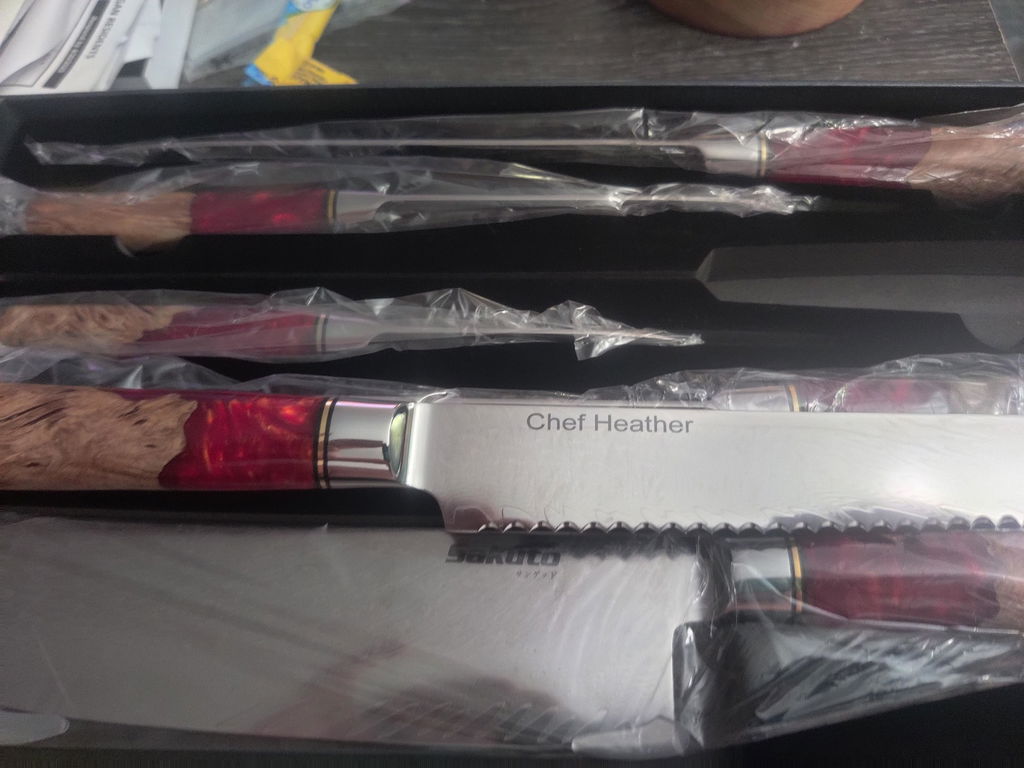
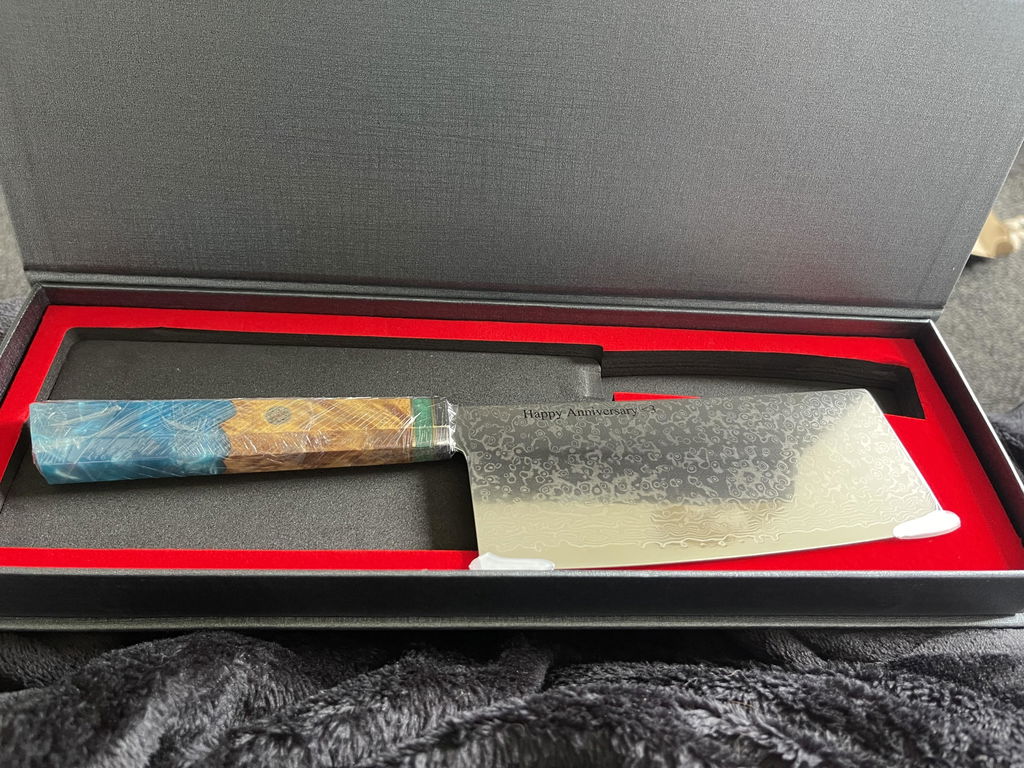
Add a personal touch by engraving meaningful words or a message of your choice on the blade, turning it into a keepsake you can see and use daily. Sakuto Knives provides free blade engraving.
CUT LIKE A PRO
A chef's first real set of knives is a big deal. Make it a Mizuchi Pro Chef Set--the finest blades available at Sakuto Knives. A significant investment, this set will serve your kitchen needs perfectly for years.
HIGHEST QUALITY STEEL
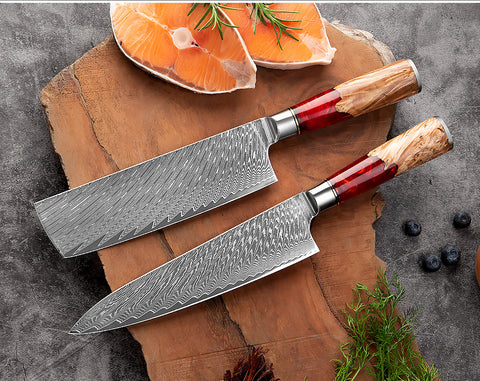
These blades are forged in splendor with a Japanese VG10 Steel core, the gold standard for chefs. 33 individual layers of premium Damascus Steel are folded over either side to add strength and a beautiful texture.

UNIQUE HANDLE DESIGN
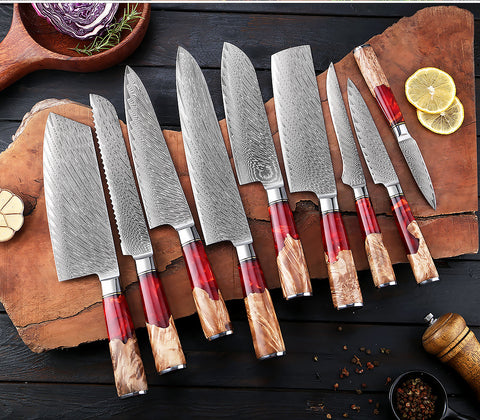
These knives feature made-to-order handles to match the fine steel. Pressure-treated wood combines with a strong red resin to form a sturdy grip for a balanced blade. Each natural wood slab is unique, so the resin sets to form a different gorgeous handle for each knife.
AVAILABLE KNIVES:
- 9.5" Chef Knife
- 8" Chef Knife
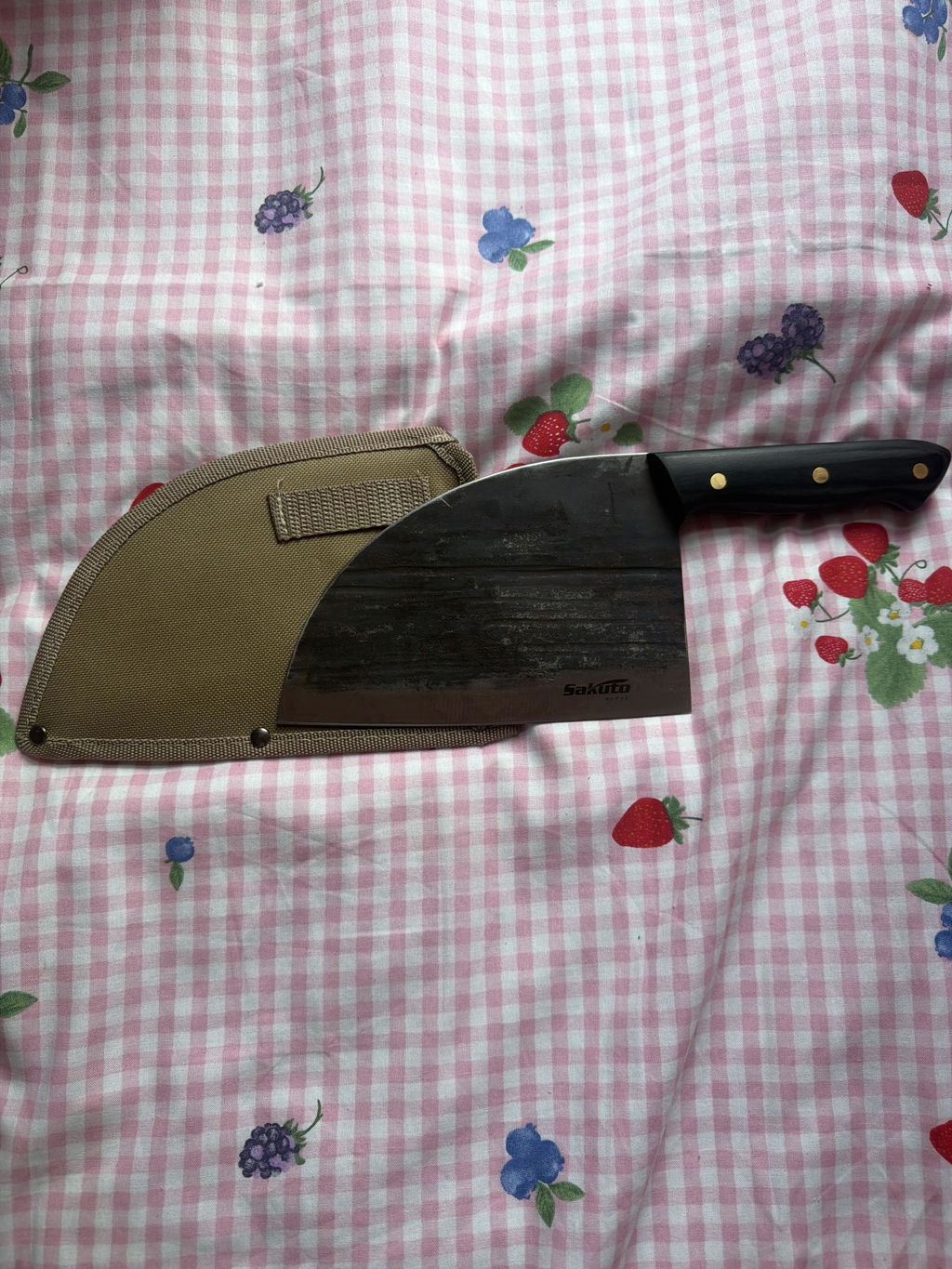
- 7.5" Cleaver
- 7.5" Bread Knife
- 7" Santoku Knife
- 6" Boning Knife
- 5" Utility Knife
VALUE SETS:
- 7-Piece (Best Value - Save 38%): Includes ALL knives listed above!
- 5-Piece: 9.5" Chef, 7.5" Bread, 7" Santoku, 6" Boning, 5" Utility
- 3-Piece (Most Popular): 8" Chef, 6" Boning, 5" Utility
- Custom Sets are Available upon request! Contact support.
SPECIFICATIONS:
- Blade Material: Japanese VG10 + Damascus Steel
- Handle Material: Natural Wood + Red Resin
- Rockwell Hardness: 60
WHAT'S INCLUDED
- 1 x Your Selected Knife Set
- 1 x Gift Box
AVAILABLE KNIVES:
· 9.5" Chef Knife
· 8" Chef Knife
· 7.5" Cleaver
· 7.5" Bread Knife
· 7" Santoku Knife
· 6" Boning Knife
· 5" Utility Knife
· 3.5" Fruit Knife
VALUE SETS:
· 7-Piece (Best Value - Save 30%): Includes ALL knives listed above!
· 5-Piece: 9.5" Chef, 7.5" Bread, 7" Santoku, 6" Boning, 5" Utility
· 3-Piece (Most Popular): 8" Chef, 6" Boning, 5" Utility
· Custom Sets are Available upon request! Contact us for support.
SPECIFICATIONS:
· Blade Material: Japanese VG10 + Damascus Steel
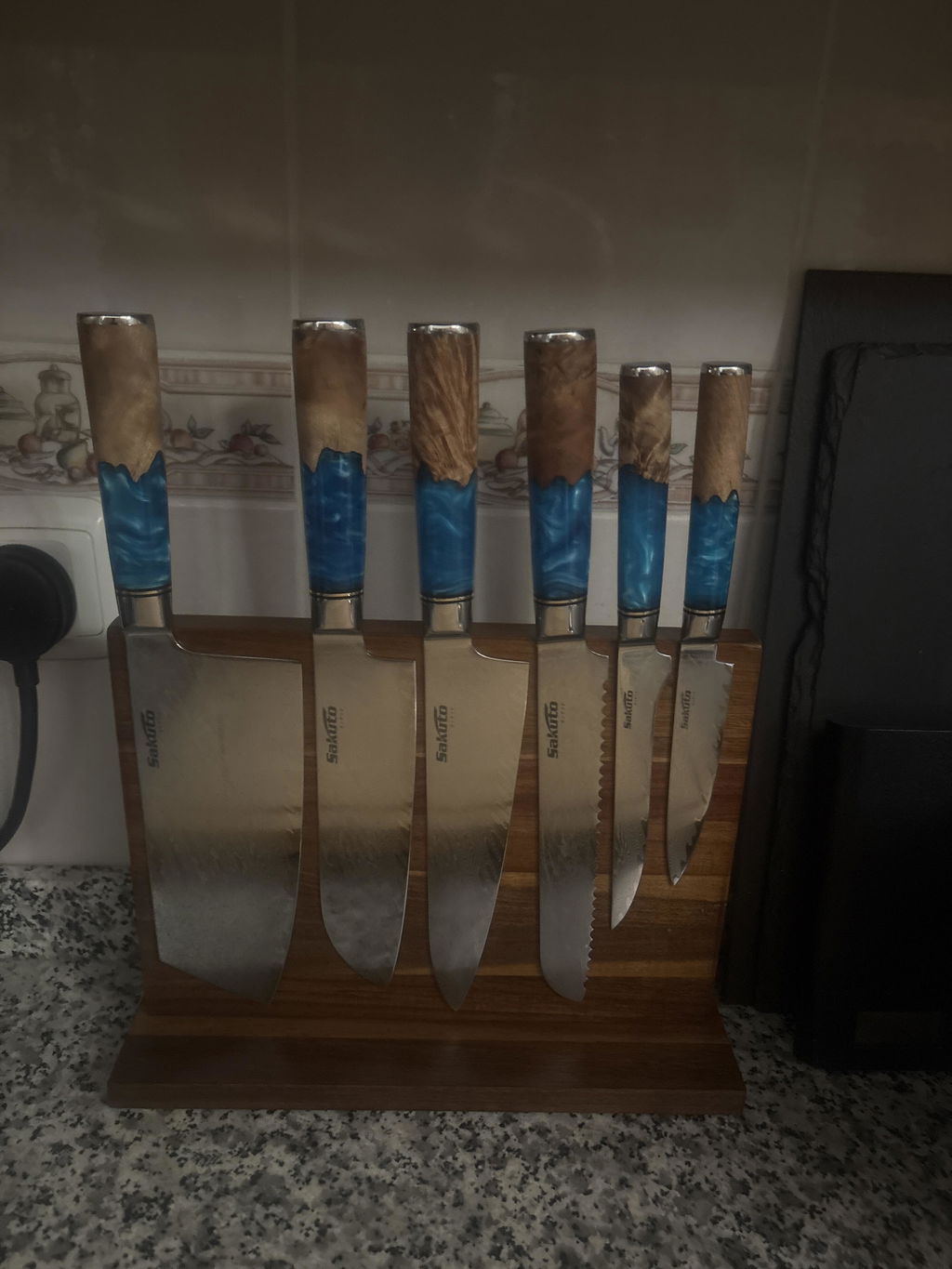
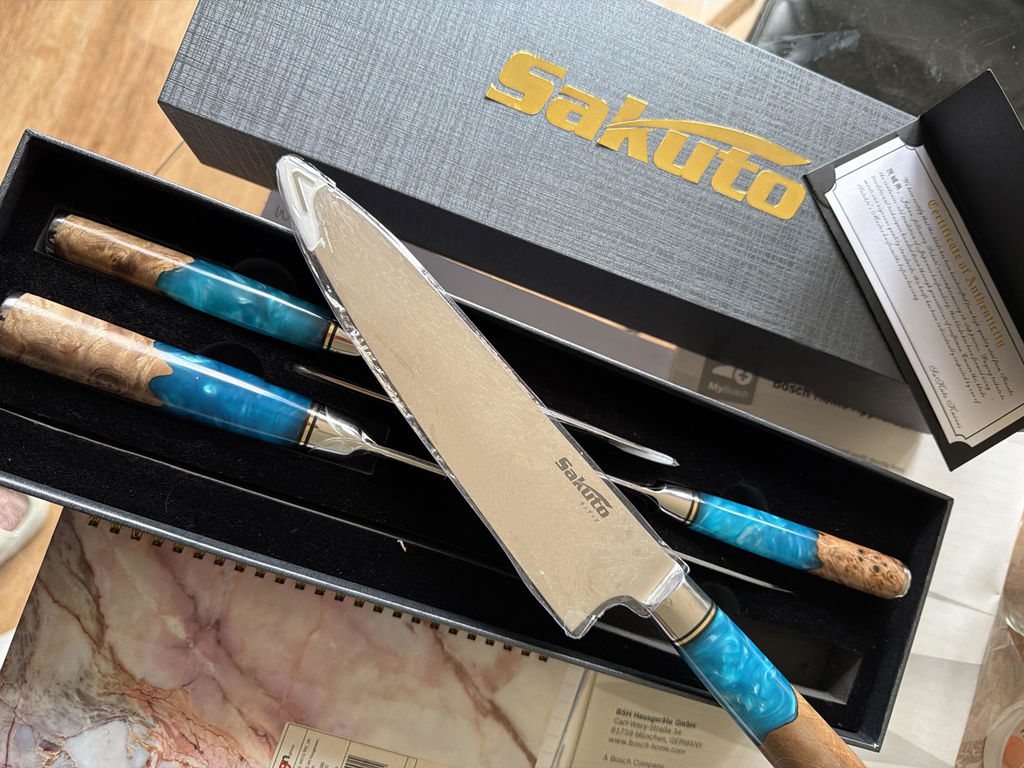
· Handle Material: Natural Wood + Blue Resin
· Rockwell Hardness: 62
At the heart of SAKUTO KNIVES is a fusion of tradition and advanced metallurgy. Our blades feature a razor-sharp VG10 steel core, prized for its exceptional hardness, edge retention, and stain resistance. This core is wrapped in multiple layers of Damascus steel, creating a robust cladding that enhances durability while revealing a unique flowing pattern on every blade. Paired with a carefully balanced, ergonomic handle, these materials deliver precision, comfort, and long-lasting performance in the kitchen.
SAKUTO's Damascus steel is crafted by layering 33 layers of metal, then forging them into a single blade. This layering technique creates the stunning rippling pattern seen on the blade.
These patterns are revealed as our artisans grind the blade down to its razor-sharp edge and are further accentuated through the process of bead blasting. Bead blasting also creates surface textures which helps reduce cutting drag and release food from the blade. Not only does Damascus steel look beautiful, but it is stain resistant and extremely durable.
About Knife Handle
SAKUTO handles are made from genuine hardwood and a composite resin, making them durable and moisture-resistant. It has been sanded and polished to create a glossy finish. Like natural wood, each piece of Wood is unique.
HOW TO CARE FOR YOUR DAMASCUS
CUTTING TECHNIQUE
SAKUTO cutlery is designed for smooth slicing rather than harsh chopping. When using your knife, try to mimic a "handsaw motion" while slicing by pushing your knife forward and down, then pulling it back toward your body. Begin slowly, your skill and experience should determine your cutting speed. Always be aware of where your fingers are in relation to the blade. Please refrain from using SAKUTO blades except the cleaver knife on tough materials such as frozen foods or bones. Our blades are intended for precision slicing rather than crushing or chopping.
SHARPENING & HONING
In order to maximize and maintain the performance
For your SAKUTO blade, we suggest regular honing every 2-4 weeks with a ceramic or steel rod. This will extend the time between sharpenings significantly and keep your blade in good condition.
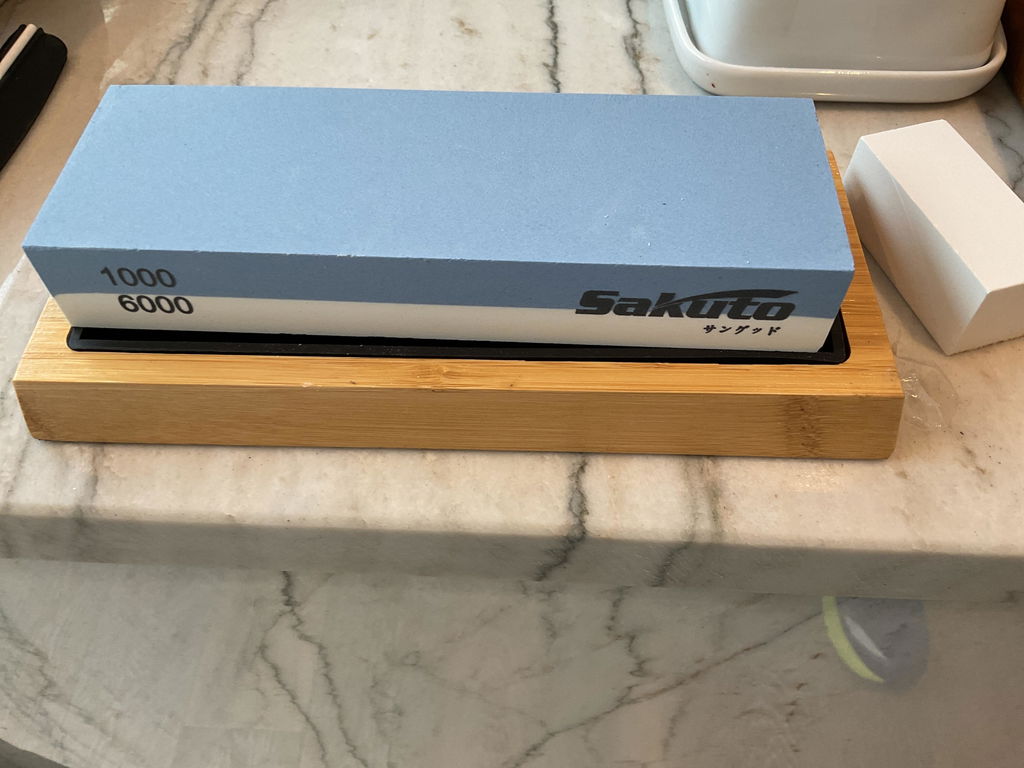
Once it is time to sharpen your blade, use a traditional whetstone for a razor-sharp and precise edge, preferably a medium grit sharpening stone and a fine grit stone for finishing.
USING A WHETSTONE
1. Soak the whetstone in water for 5-10 minutes or until the air bubbles stop appearing, which indicates the stone has absorbed the optimal amount of water.
2. While sharpening, continue to apply water to the stone. The combination of the water and the small particles released from the stone create an abrasive substance that sharpens the blade.
3. Place the stone on a slip-resistant surface, such as a towel, and begin sharpening with the coarse grit of your stone.
4. Move the blade away from then towards the body, in a black and forth motion, at an angle of 10-15°
across the stone. Use light pressure.
5. Begin at the tip of the blade, pull the blade over the stone through the middle and down to the base of the blade.
6. Turn the knife around and work on the other side of the blade. Repeat this process as many times as you feel is necessary.
7. To finish, pull the blade at an angle (use the same angle throughout your sharpening) twice against the edge to remove the last burs.
8. Rinse the whetstone and clean the grinding residue.
9. Rinse the knives thoroughly in hot water and pat dry.
WASHING & DRYING
We highly recommend hand washing your knife with a gentle dish soap. Make sure your soap is free of bleach or citrus extracts, as they can cause your knife to rust. Rinse and towel dry immediately and meticulously, remove any lingering moisture from your blade.
Although the wood used in our handles has been stabilized, like any wood it may shrink in arid climates or swell in humidity. The color may also change slightly over time; this is not a defect but rather a natural process caused by oils in the hand, light exposure, and oxidation.
CUTTING SURFACE
A quality cutting board can help maintain your blade's sharp edge over time. We recommend medium-soft woods such as hinoki rather than harsh materials such as tile, synthetic, granite, marble, ceramic, or any kind of glass.
STORAGE
We recommend that you store your knife in a wooden block, in-drawer knife tray, sheath, or knife case. Avoid storing your knives unsheathed in a drawer.